2026 Top Trends in Metal Cans for Sustainable Packaging Solutions?
In recent years, the demand for sustainable packaging has surged, positioning metal cans at the forefront of the industry. According to a recent report by Smithers Pira, metal cans are expected to dominate the global packaging market, reaching a valuation of over $31 billion by 2026. This growth reflects an increasing consumer preference for environmentally friendly options. Metal cans are recyclable and preserve product quality, making them a favored choice among brands committed to sustainability.
However, the industry faces challenges. While 75% of metal cans are recycled, there is still room for improvement. The recycling rate varies by region and material type. Stakeholders must work collaboratively to boost these numbers further. Emerging trends include lightweighting and innovative coatings that enhance recyclability. These developments can reduce environmental impact while meeting the consumer's demand for durability.
As we look toward 2026, it’s essential to explore how metal cans will evolve. The continued innovation in design and materials will not only promote sustainability but also create new opportunities for brands. The intersection of functionality and eco-friendliness in metal can packaging offers a glimpse into the future of sustainable solutions.

2026 Metal Can Market Value: Growth and Sustainability Statistics
The metal can market is projected to witness significant growth in 2026. The increasing demand for sustainable packaging solutions plays a pivotal role. Consumers focus on eco-friendly options, pushing companies to adapt. Metal cans stand out due to their recyclability and durability.
Statistics indicate that the global metal can market will exceed a substantial valuation. Various sectors, such as food and beverage, show a strong upward trend. Interestingly, while the growth is promising, challenges persist. Supply chain issues and environmental concerns need addressing. Companies often face difficulties in sourcing recycled materials.
Moreover, the push towards sustainability doesn't come without its drawbacks. The production process of metal cans can be energy-intensive. This paradox necessitates ongoing research for greener methods. Consumers are increasingly critical of brands, seeking transparency in practices. Brands must now prioritize sustainability. The landscape is transforming, and adaptation becomes critical.
2026 Top Trends in Metal Cans for Sustainable Packaging Solutions
| Trend |
Market Value (USD Billion) |
Growth Rate (%) |
Sustainability Index |
Recycling Rate (%) |
| Increased Use of Recycled Materials |
35.0 |
5.5 |
85 |
75 |
| Smart Packaging Technology |
25.0 |
7.2 |
78 |
68 |
| Lightweight Can Design |
20.0 |
4.0 |
80 |
70 |
| Bio-based Coatings |
17.5 |
6.5 |
83 |
60 |
| Consumer Preferences for Eco-friendly Products |
30.0 |
8.0 |
90 |
80 |
Industry Shift: Increased Adoption of Recyclable Metal Cans in Packaging
The packaging industry is witnessing a remarkable shift toward recyclable metal cans. Recent data from industry reports highlights that metal cans have a recycling rate of about 70%, significantly higher than many other packaging materials. Consumers are increasingly aware of their environmental impact. The preference for metal over plastic is notable, with some surveys indicating that over 70% of consumers favor sustainable packaging.
This trend aligns with global ambitions to reduce waste. Many businesses are now adopting metal cans to meet consumer demand. However, challenges remain. The production process of metal cans can be resource-intensive, and not all recycling systems are efficient. Furthermore, the perception of metal cans as heavy can deter some brands. Yet, the overall environmental benefits often outweigh these concerns. As innovations in production improve, the industry may see solutions that address these imperfections.
Adopting metal cans can also drive costs. While the initial investment might be higher, long-term savings through recycling can be significant. Some reports suggest that companies transitioning to recyclable materials see a 10-15% reduction in overall packaging costs over time. This promising data reflects a renewed focus on sustainability, yet the industry must constantly evaluate its methods and materials to truly lead in the packaging revolution.
Eco-Friendly Innovations: Advances in Metal Can Technologies for Sustainability
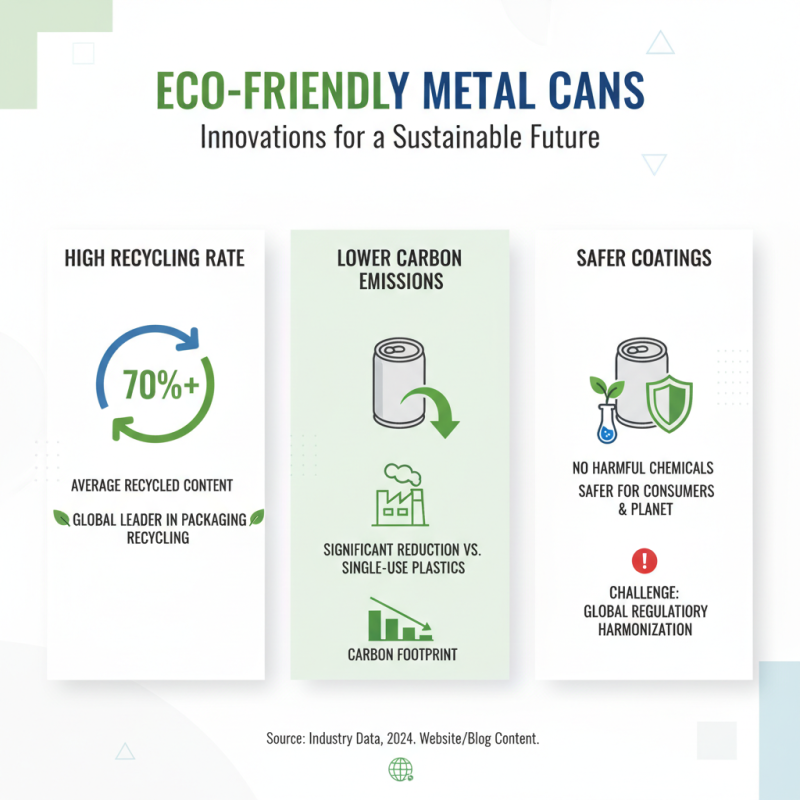
Metal cans continue to advance as eco-friendly packaging, driven by innovations improving sustainability. Recent industry data shows metal cans now have an average recycled content of over 70%. This high recycling rate drastically lowers carbon emissions compared to single-use plastics. New coating technologies reduce the need for harmful chemicals, making cans safer for consumers and the environment. However, the challenge remains in mainstreaming these coatings globally due to regulatory differences.
A key innovation is the development of lightweight metal cans. They use less material while maintaining strength and durability. According to market research, lightweight cans can reduce material use by up to 15%, cutting production energy and shipping costs. Still, producing ultra-thin cans requires careful quality control to avoid dents and leaks, presenting a technical hurdle.
Recycling infrastructure also affects the overall sustainability impact of metal packaging. Regions with advanced collection systems report recycling rates as high as 90%. But many areas lag behind, limiting metal cans’ end-of-life benefits. Continuous investment in both technology and waste management is crucial. The industry must find balanced solutions that push sustainability without compromising product safety or accessibility.
Consumer Preferences: The Rise of Sustainable Packaging Choices in Beverages
Consumer preferences in the beverage industry are shifting. More people now seek sustainable packaging options. Metal cans are becoming a popular choice. They offer recyclability and a lower carbon footprint. This aligns well with growing environmental consciousness among consumers. Notably, aluminum cans can be recycled endlessly, which enhances their appeal.
The aesthetics of metal cans also draw attention. Many brands now execute innovative designs that attract consumers in stores. These cans can be colorful and creatively designed. However, some consumers still feel unsure about the impact of metal production on the environment. The energy required for aluminum extraction and recycling can be significant. Awareness campaigns are crucial to educate consumers on the actual benefits of choosing metal cans.
Flavor preservation is another reason for the rise of metal cans. They are excellent at maintaining the quality of beverages. Many people enjoy the idea of supporting sustainable practices without sacrificing quality. Yet, some hesitate, thinking about alternatives like glass or cartons. It's clear that while metal cans provide a solution, ongoing conversation about their sustainability is vital. Balancing convenience and environmental impact remains a challenge for both manufacturers and consumers.
Regulatory Impact: How Legislation is Shaping Metal Can Sustainability Practices
The regulatory landscape is rapidly evolving, significantly impacting metal can sustainability practices. Governments worldwide are recognizing the environmental benefits of metal cans, particularly their recyclability. Stricter regulations are now emerging, promoting the use of recyclable materials. This aims to reduce plastic waste and improve recycling rates across industries.
Many manufacturers face challenges adapting to these new rules. Compliance can be costly and complex. These regulations often require transparency in sourcing materials and tracking environmental impact. Companies need robust systems to monitor their compliance and sustainability efforts. However, with these challenges come opportunities to innovate. The push for sustainability encourages brands to invest in greener technologies.
As these regulations evolve, collaboration becomes essential. Stakeholders must work together to share best practices and streamline recycling processes. Consumer demand plays a big role here too. Educating the public on proper recycling can enhance participation and effectiveness. Without this collective effort, the true potential of metal cans as sustainable solutions may not be fully realized.



 +8618680445103