
• Facebook
  • twitter
  • Instagram
  • YouTube
Free Standard Samples can be provided for you to check the quality.
We respect your confidentiality and all information is protected.
Leave Your Message
*Name Cannot be empty!
* Enter product details such as size, color,materials etc. and other specific requirements to receive an accurate quote. Cannot be empty

10 Best Food Metal Can Suppliers for Global Buyers

Choosing a Food Metal Can supplier is a practical decision with consequences beyond the quoted unit price. Global buyers must weigh product quality, production capacity, delivery reliability, and clear communication. A can may look simple on a sample table. Its performance depends on material choice, coating, dimensions, and the consistency of each production run. Ask suppliers how they manage quality checks and handle changes in orders. Small details matter.

This guide introduces ten suppliers for buyers comparing options across regions and product needs. It highlights useful points to investigate, including can formats, customization, minimum order quantities, lead times, and access to technical support. Food-contact documentation and quality certifications should be checked against your product and destination-market requirements. Do not rely on a directory entry alone. Request current specifications, sample cans, and written delivery terms before making a decision. A polished website cannot show how a supplier responds when a shipment is delayed. And research has limits. Availability, pricing, and production capabilities can change, so confirm each detail directly with the supplier. Use this list as a starting point, then compare the evidence that matters to your business.
10 Best Food Metal Can Suppliers for Global Buyers

Understanding Food Metal Cans and Their Role in Food Packaging

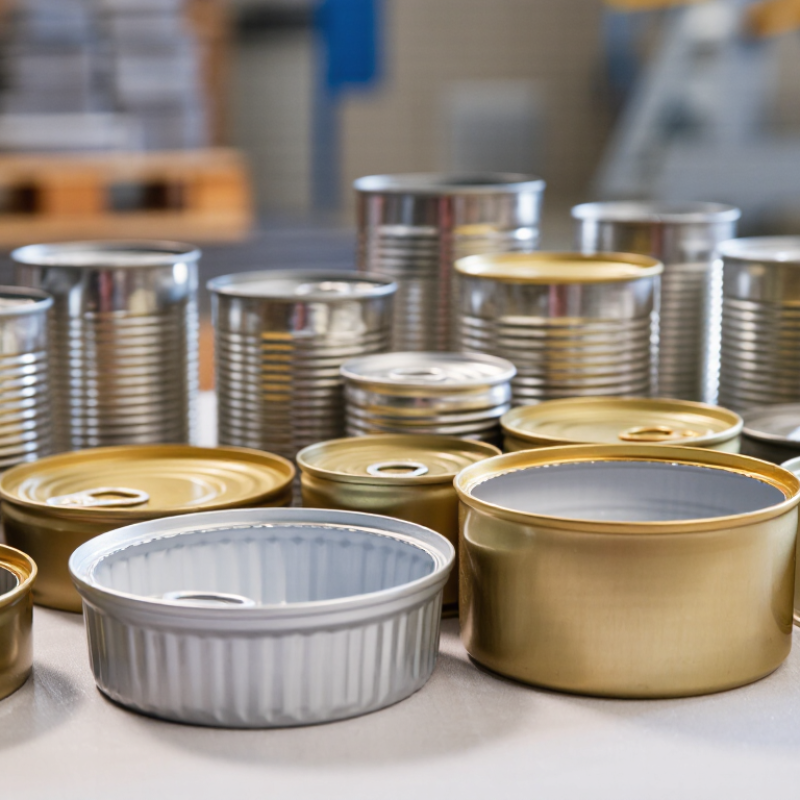
Food metal cans are rigid containers designed to protect food from light, air, and physical damage. Their role goes beyond holding a product: the can, its coating, and its closure work together to preserve quality during storage and transport. For many foods, a properly sealed can can support a long shelf life without continuous refrigeration. The result depends on the food and its processing, not on the container alone. Not magic.

Steel cans are strong and widely used, while aluminum cans are lighter and resist corrosion. Both materials can be shaped for different foods, from vegetables to sauces. The inner coating helps limit contact between the food and metal, but it must suit the product. Acidity, salt, and storage conditions matter. A practical review should include coating compatibility, seam integrity, and the filling and heating process. Small details count.

For global buyers, samples and technical specifications are more useful than broad claims. Ask about material thickness, closure dimensions, coating options, and inspection records. A can may look flawless yet still need careful seam checks. That is easy to overlook. Suppliers should provide clear, consistent information, but buyers also need to test cans with their own product and production line. A minor mismatch in dimensions can disrupt filling or sealing. No package is perfect; the right choice balances protection, handling, cost, and the needs of the food inside.
Common Can Materials, Designs, and Manufacturing Processes

Food cans commonly use tin-coated steel or aluminum. Tinplate combines a steel body with a thin protective tin layer; it is rigid and suits stacked shipping. Aluminum is lighter and often used for easy-open, two-piece cans.

Neither material is automatically better. Product acidity, filling temperature, shelf-life targets, and transport conditions all affect selection. Internal lacquer or polymer coatings can limit contact between food and metal, but the coating must suit the product.

A tomato-based filling, for example, needs different compatibility checks than dry beans. Small details matter.

Common designs include three-piece welded cans and two-piece cans formed from a single metal blank. In three-piece production, a flat sheet is rolled, side-seamed, and joined to the ends. Two-piece cans have fewer body seams, though they still need a separate lid.

Manufacturers may clean cans, apply coatings, inspect surfaces, and test seams for leaks. Filling and sealing methods vary with the food and production process.

Ask suppliers for material specifications, coating details, and seam-test records. A sample run helps. It can still miss a production issue, so check routine batch records for variation.

Standards and Criteria for Evaluating Global Can Suppliers

A reliable metal can supplier should prove process control, not just quote a low unit price. Ask for current quality-management and food-safety certificates, then verify their scope, issuing body, and renewal date. Request material specifications, coating details, and test records for the intended food. For samples, inspect the can body, lid fit, seam consistency, and coating after filling and storage. Small details matter. A neat sample does not prove every production lot will match it.

Capacity and traceability deserve equal attention. Ask how the supplier records batch numbers, handles defects, and manages changes to materials or production lines. Check whether its equipment supports your required diameter, height, thickness, and opening style. Confirm lead times with a trial order, not only a sales estimate. APEAL’s 2021 data reported an 82% recycling rate for steel packaging in Europe; the figure is regional, not a guarantee for every market. The International Aluminium Institute says recycling aluminium can use up to 95% less energy than producing primary metal. Ask suppliers for the evidence behind environmental claims. Still, a checklist cannot reveal every weakness; an on-site audit may expose gaps that paperwork misses.

10 Best Food Metal Can Suppliers for Global Buyers - Standards and Criteria for Evaluating Global Can Suppliers

Buyer-focused evaluation framework. The entries below describe supplier capabilities and verification criteria, not named or ranked companies. Applicable requirements vary by destination market, food type, and packaging use.

No. Supplier capability to evaluate Evidence to request Relevant standard or requirement Why it matters to global buyers
1 Food-contact regulatory compliance Declarations of compliance, material specifications, and supporting migration or safety documentation for the can body, ends, and coatings. For the EU, Regulation (EC) No 1935/2004 establishes the general framework for food-contact materials. For the United States, applicable FDA food-contact regulations include 21 CFR Parts 174–178; 21 CFR 175.300 covers certain resinous and polymeric coatings. Food-contact rules depend on the market and intended conditions of use. Buyers should verify the specific materials and uses rather than rely on a general compliance claim.
2 Food safety management Current certificates, scope and site details, hazard-analysis documentation, and audit summaries relevant to the packaging manufacturing site. ISO 22000 specifies requirements for a food safety management system. FSSC 22000 is a food safety certification scheme based on ISO 22000 and related requirements. A documented food safety system helps manage hazards and responsibilities throughout packaging production; confirm that the certificate covers the actual facility and activities.
3 Quality management and process control Quality-system certificate, inspection plans, nonconformance records, corrective-action process, and control plans for critical production steps. ISO 9001 specifies requirements for a quality management system. Certification is voluntary unless required by a customer or contract. Consistent controls support repeatable dimensions, coating application, seam quality, and documented handling of defects.
4 Can coating and internal-lining suitability Coating type, technical data, intended food and process conditions, application controls, and relevant test results or compliance documents. Applicable food-contact regulations in the destination market; for the EU, Regulation (EC) No 2023/2006 sets good manufacturing practice requirements for food-contact materials and articles. Coating selection must match the product’s acidity, salt or sulfur content, storage period, and processing conditions. Confirm suitability with product-specific technical review.
5 Double-seam integrity Seam specifications, inspection frequency, dimensional inspection records, teardown or sectioning procedures, and defect escalation criteria. Use validated seam specifications and inspection methods appropriate to the can design, end, seamer, and filling process; requirements should be agreed with the can maker and filler. The double seam is a critical closure area. Its dimensions and condition affect container integrity and should be verified under defined production conditions.
6 Retort and storage performance Written limits for temperature, pressure, and process conditions; test protocols; and performance data for the specified can, end, and coating combination. Specifications and validation should reflect the buyer’s actual thermal process and product. No single can specification establishes suitability for every retort process. Thermal processing can stress the container and closure. Confirm performance for the intended process rather than extrapolating from a different product or can size.
7 Material specifications and dimensional consistency Metal grade or material designation, thickness or gauge tolerances, coating specifications, can and end drawings, and lot-specific inspection records. Contractual product specifications and agreed drawings should define dimensions, tolerances, materials, and acceptance criteria. Clear specifications help confirm compatibility with filling lines, seaming equipment, product weight, and distribution requirements.
8 Traceability and recall readiness Lot-coding method, records linking incoming materials to finished goods, retention period, and documented traceability or mock-recall test results. Traceability and record-keeping obligations depend on the applicable jurisdiction and contract. For EU food-contact materials, Regulation (EC) No 1935/2004 includes traceability provisions. Effective lot-level records help identify affected packaging quickly during a quality issue, investigation, or market withdrawal.
9 Production capacity and supply continuity Available formats and tooling, stated lead times, capacity commitments, minimum order quantities, contingency arrangements, and change-control procedures. These are commercial and operational criteria; define measurable service levels and notification requirements in the supply agreement. Capacity, tooling, and contingency planning affect launch schedules and resilience. Verify claims against the required can format, order volume, and delivery plan.
10 Export packaging and sustainability data Export-packaging specifications, shipment protection details, material composition data, and substantiation for recycled-content or recyclability claims. Export and environmental requirements vary by destination. Request documented, market-relevant evidence for any environmental claim. Suitable transit packaging helps reduce shipping damage. Verifiable sustainability data supports accurate reporting and avoids unsupported environmental claims.

Ten Food Metal Can Suppliers Serving International Buyers

For global buyers, a useful shortlist of ten food metal can suppliers should reflect different production needs, not just low prices. It may include specialists in three-piece tinplate cans, two-piece cans, easy-open ends, retort packaging, and custom-printed containers. Other suppliers may focus on small production runs, high-volume orders, export packing, or technical support. Compare each supplier’s food-contact documentation, production controls, sample quality, and experience shipping to your destination. Ask how they protect cans from dents and moisture during transit. Details matter.

A polished sample is helpful, but it cannot reveal every production issue. Request trial quantities when possible, and inspect seams, coatings, dimensions, and opening performance. Confirm lead times in writing, including the time needed for artwork approval and pre-shipment checks. Clear communication is useful; vague answers about specifications deserve follow-up. A supplier’s export experience can reduce avoidable delays, though it does not guarantee a smooth shipment.

Tips: Send every candidate the same can dimensions, capacity, coating needs, order volume, and delivery schedule. Compare written quotations line by line. Keep a sample from each shortlisted supplier for reference, and record any differences you notice.

Comparing Supplier Capabilities, Markets, and Product Offerings

A useful comparison of ten food metal can suppliers starts with production capability, not catalogue size. Check can diameters, wall thickness, seaming options, coating systems, and whether suppliers can support both standard and custom formats. Ask for seam inspection records and food-contact test documentation. Small details matter: a lid that runs smoothly on the filling line can prevent costly stoppages.

Markets shape what each supplier offers. Regional plants may shorten shipping time, while export-focused manufacturers may provide broader capacity and established logistics. Compare minimum order quantities, sample lead times, printing options, and access to technical support. The Metal Packaging Europe 2022 recycling data reports an 80.5% recycling rate for steel packaging in Europe. That makes material specifications and end-of-life claims relevant, but supplier figures should be checked against the report’s scope.

FAO’s 2023 food-loss assessment estimates that 13.2% of food is lost between harvest and retail worldwide. Metal cans can protect food during storage, but packaging alone cannot prevent every loss. Fit matters more. Supplier data are not always comparable, and a polished capability sheet may hide limits on smaller runs or unusual formats. Buyers should compare actual samples and written specifications, not just promises.