Best Medicine Container for Home Use Tips and Recommendations?
When it comes to effective healthcare at home, choosing the right medicine container is crucial. The right container can help in organizing your medications and ensuring they are secure and accessible. A well-designed medicine container minimizes the risk of misplacement and reduces medication errors, especially for families or those managing chronic conditions.
Consider the features of an ideal medicine container. It should be easy to open but secure enough to prevent accidental access. Transparency can help you quickly identify contents without opening it. Some containers offer compartments or labels, allowing better organization. Yet, sometimes, the perfect design does not exist. Users may need to compromise between size and accessibility.
Reflecting on our choices, many overlook the importance of proper storage. Without the right container, medications might be lost or unusable. Dust, humidity, and temperature fluctuations can reduce effectiveness. A good medicine container safeguards health. Ultimately, careful selection can lead to better management of your medications.

Choosing the Right Medicine Container for Home Use
When selecting a medicine container for home use, it's essential to prioritize safety and accessibility. A study from the National Institute of Health indicates that 50% of households do not store medications properly. This can lead to serious health risks, especially for children. A good container should be child-resistant yet easy for adults to use.
Consider the size of the container as well. Many families often underestimate the space required. A survey by the American Association of Poison Control Centers revealed that improper storage contributed to over 100,000 accidental poisonings each year. Clear labeling is critical. Labels should include dosage instructions and expiration dates. Using containers with easy-to-read information can prevent mistakes.
Transparency in design can also promote better habits. Some containers come with compartments for daily doses, making it easier to track medication schedules. However, many people still neglect to check their supplies regularly. Regularly updating supplies can reduce wastage and promote adherence to prescribed routines. Maintaining a well-organized medicine cabinet can significantly mitigate risks.
Key Features to Consider in Medicine Containers
When selecting a medicine container for home use, several key features should be prioritized. The capacity of the container is crucial. Research indicates that over 60% of households store medications improperly due to inadequate space. Choosing a container that can accommodate various sizes of bottles ensures better organization and accessibility.
Another important aspect is child safety. According to data from the American Academy of Pediatrics, nearly 75,000 children each year require emergency treatment due to accidental ingestion of medications. Containers with child-resistant features should be on the checklist. Additionally, consider materials that prevent moisture and light exposure. A watertight container prolongs the shelf life of medications, safeguarding their efficacy.
Labeling capacity is often overlooked but critical. Clear labels on containers enhance medication management. A study found that improper labeling contributes to over 10% of medication errors at home. Opt for a container that allows space for easy-to-read labels. Emphasizing these features leads to better adherence to medication regimens and enhances overall safety.
Medicine Container Features Comparison
Types of Medicine Containers and Their Uses
When it comes to medicine containers, various types serve unique purposes in our homes. Pill organizers are quite popular. They often come with compartments for each day or each dose. This feature simplifies your medication routine. You can set them for a week or a month. However, many people forget to refill them on time. This can lead to missed doses.
Another common type is the child-proof bottle. These containers keep medicines safe from little hands. They often include safety mechanisms that require a certain touch to open. Yet, frustrated adults sometimes struggle with these features. It is essential to strike a balance between safety and usability.
There are also liquid medicine containers. These typically have measuring cups or droppers. Accuracy is crucial with liquids. Missing a dose can easily occur if the measurement tools are unclear or hard to use.
Some might overlook the importance of labeling. Containers without labels can lead to confusion. Organizing by type or frequency can also be helpful. Yet, even organized spaces can have moments of chaos. Reflecting on this may encourage better habits. Finding the right container is not just about function; it's also about ensuring everyone in the household stays healthy and safe.
Tips for Organizing and Storing Medications Safely
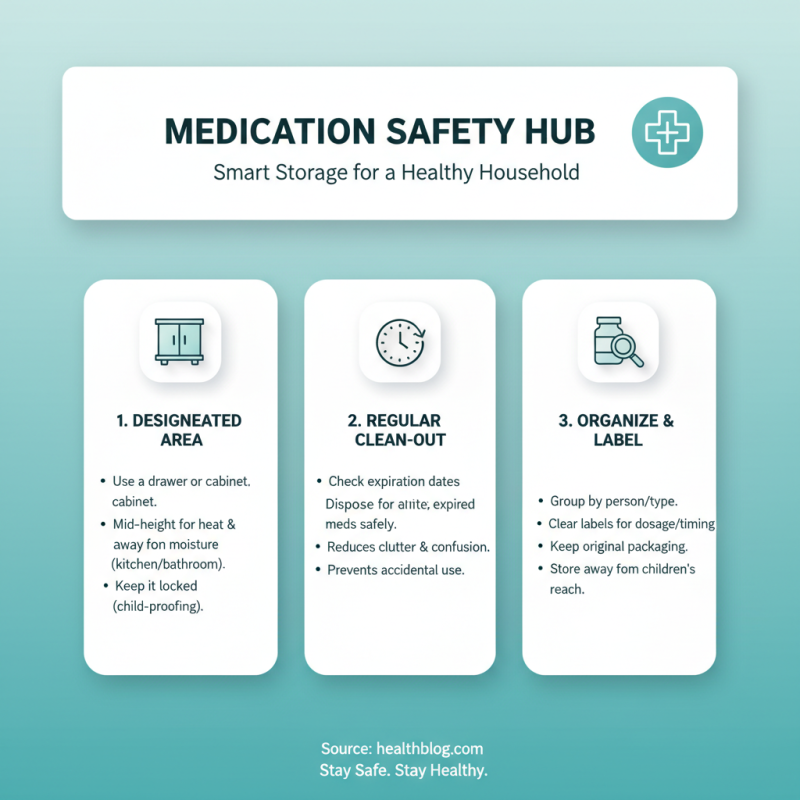
Organizing and storing medications safely is vital for every household. Start by designating a specific area for all medications. A drawer or a cabinet can work well. Avoid using areas too high or low, as they can be hard to access when needed. Clear out expired medications regularly. This helps to reduce clutter and potential confusion.
Using clear containers can enhance organization. Label each container with contents and usage instructions. Consider color-coding based on family members or types of medicine. It's tempting to keep everything together, but separating prescriptions from over-the-counter medications is smart. Having a medication log can help track what’s in your home.
Remember, not every method will work for everyone. You might try a few different systems before finding what fits best. Sometimes, it’s easy to overlook storage details. For instance, children’s medications should always be out of reach. Double-check what’s stored where. Mistakes happen. Reflect on your organization method regularly. Regular reviews can prevent potential mishaps.



 +8618680445103