What Are China's Top 10 Food Can Suppliers for Global Buyers?
Choosing a supplier for Food Cans is more than comparing quoted prices. Buyers need packaging that protects products and fits existing production lines. A dependable partner should explain material options, coating suitability, dimensions, closure types, and quality checks in clear terms. Small details matter. A seam issue or poorly matched internal coating can create costly delays after delivery.
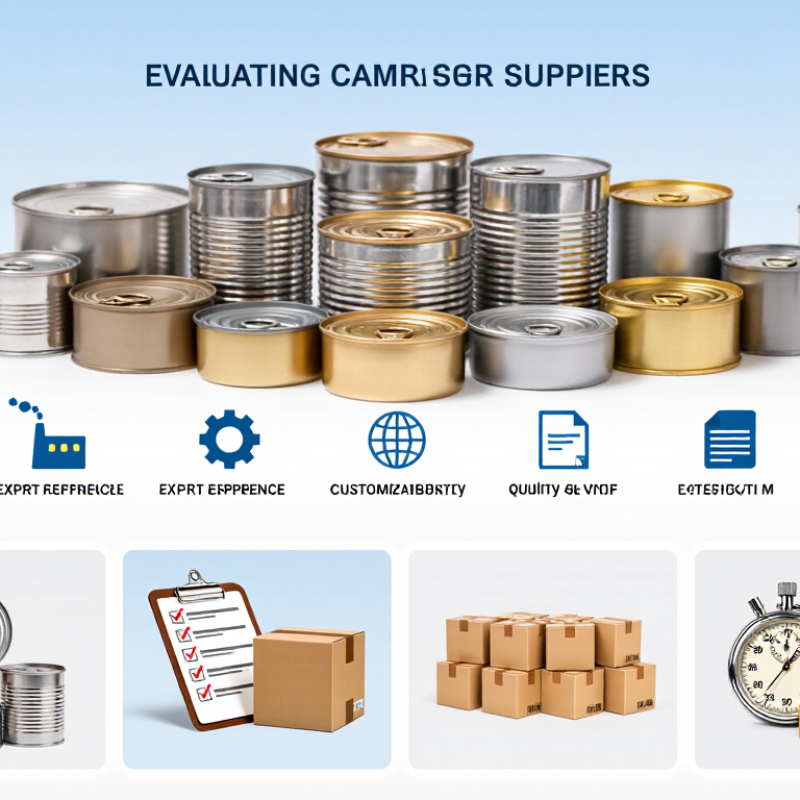
This guide introduces ten suppliers for global buyers to evaluate, not a universal ranking. It considers product range, manufacturing capability, export experience, customization, and the clarity of available company information. A supplier’s website can provide a starting point, but it cannot replace direct checks. Buyers should request current specifications, sample cans, production details, and relevant quality documentation before making a decision. Ask how the supplier handles order quantities, lead times, packaging, and communication when schedules change. Confirm that the can’s dimensions and coating suit the intended food, filling process, and storage conditions. For example, a buyer comparing two-piece and three-piece cans should discuss line compatibility, not just appearance. No shortlist stays perfect. Company capacity and terms can change, so verify important claims with each supplier. Use these profiles to build a practical comparison, then choose the partner whose evidence, service, and product fit your needs.
Understanding China's Food Can Manufacturing Industry
China’s food can industry serves buyers with a broad mix of factory sizes, production methods, and export experience. Many manufacturers work with tinplate or aluminum and handle cutting, coating, printing, forming, and seaming in-house. These steps affect more than appearance. A poorly controlled seam, for example, can compromise a can’s seal, while an unsuitable internal coating may not match a product’s acidity or filling temperature.
Specifications need detail. Buyers should share the food type, fill process, target dimensions, closure style, and expected storage conditions. Ask for samples made on the intended production line, not only attractive showroom pieces. Request records for coating checks, seam inspections, and batch traceability. Useful evidence is specific: a test date, a measured result, and the lot it covers. Details matter. One document rarely answers every question.
Supplier comparisons should include tooling costs, minimum order quantities, production capacity, and realistic lead times. A factory tour can show clean equipment and orderly material storage, but it cannot reveal every weak point. Capacity figures may also look better on paper than during a busy season. I would want to understand how the plant handles rejected cans and specification changes; this is easy to overlook. Clear communication and consistent records can matter as much as a low unit price.
Criteria for Ranking Food Can Suppliers
What Are China’s Top 10 Food Can Suppliers for Global Buyers?
Criteria for Ranking Food Can Suppliers
A useful ranking starts with food safety, not factory size. Check whether suppliers document food-contact materials, coating specifications, and batch traceability. Ask for recent seam inspections and leak-test records, not only a polished sample. Small details matter. Can a factory trace one production lot back to its material records? That answer reveals more than a brochure.
Product consistency deserves close attention. Compare can dimensions, wall thickness, closure fit, and print durability across repeat orders. Request test methods and inspection frequencies; vague claims are hard to verify. The FAO’s 2023 Food Loss Index report estimates that 13.2% of food was lost after harvest and before retail in 2021. This is not a can-specific figure, but it highlights why dependable packaging and delivery matter.
Export readiness is another ranking criterion. The World Bank’s 2023 Logistics Performance Index assesses areas such as shipment tracking, logistics competence, and delivery timeliness. Buyers can use these measures to frame questions about lead times, export documents, and shipment updates. Also review capacity, complaint handling, and corrective-action records. A strong audit still cannot predict every delay. That uncertainty deserves a place in the scorecard.
Profiles of China's Top 10 Food Can Suppliers
China’s food-can supplier landscape includes several distinct manufacturing profiles, and “top ten” should not imply a verified ranking. One profile is the high-volume producer, suited to steady orders and repeat specifications. Another focuses on export packaging, where careful palletizing and clear shipping documents matter. Some factories specialize in lightweight cans that reduce material use. Others handle shaped containers for products needing distinctive shelf presentation. Easy-open ends are a further specialty, with seam consistency worth checking closely.
The remaining profiles include suppliers offering small production runs, factories with in-house coating options, and regional plants positioned for shorter domestic transport. Some focus on custom dimensions, while others emphasize inspection systems and production records. These differences can matter more than a polished catalog. Ask for current food-contact documentation, sample cans, seam-test results, and recent audit evidence. Check how defects are recorded and corrected. A sample may look excellent; bulk consistency is the harder test. Supplier capacity, lead time, and minimum order quantities should be confirmed in writing, since they can change by product and season.
Food Can Construction: 2-Piece vs. 3-Piece Formats
A practical technical comparison for global buyers evaluating food can suppliers. The chart counts the main metal components in each common can construction: the body and one end for a 2-piece can, or the body and two ends for a 3-piece can.
Comparing Products, Certifications, and Export Capabilities
When screening ten Chinese food can suppliers, compare the actual pack, not just catalog photos. Some focus on three-piece steel cans for vegetables, while others offer two-piece aluminum cans for drinks or shallow containers for seafood. Check dimensions, metal thickness, lid style, and internal coating options against your filling line and product. Acidic foods may need a different coating from dry goods. Ask for samples and review seam measurements, coating test reports, and production tolerances. A can that looks identical on a screen may behave differently on a fast line.
Certifications help, but verify their scope, issuing body, and expiry date. A certificate should cover the relevant factory and product category, not merely sit in a sales folder. Ask how quality checks are recorded, and whether test results can be linked to a specific batch. Export capability matters just as much: request recent examples of export documents, typical lead times, pallet specifications, and plans for damaged goods or delayed shipments. Clear answers are useful. Vague promises are not. That sounds tidy; real orders are messier. A supplier may have strong production capacity but limited experience with your destination’s labeling or delivery needs. Compare evidence, then leave room for a small trial order before committing to a larger shipment.
How Global Buyers Can Evaluate and Select a Supplier
Selecting a food-can supplier is less about comparing rankings and more about checking whether its capabilities fit your product and market. Ask for written specifications covering can dimensions, metal thickness, internal coating, closure type, and production tolerances. Small details matter. A mismatch between can and filling line can cause delays or waste.
Request recent quality records and ask how the supplier checks seams, coating coverage, and corrosion resistance. Review test methods and traceability documents, then confirm which food-contact requirements apply in your destination market. Do not rely on a certificate alone. Ask for samples from a normal production run, not only a polished display sample. Inspect the rim, interior finish, and lid fit; discuss any unusual smell or visible defect before ordering. Then test it.
Capacity and delivery deserve equal attention. Ask for realistic lead times, minimum order quantities, and how shortages or production changes are communicated. A site visit or independent audit can help verify equipment, hygiene controls, and recordkeeping, when practical. Compare quotations line by line, including packaging, freight terms, and tooling charges. The cheapest offer may not be the lowest-risk choice. Still, a sample and a tidy audit report cannot predict every problem. Set clear acceptance criteria, document agreed changes, and begin with a manageable order before scaling up.



 +8618680445103