How to Choose the Best Metal Containers for Food Storage and Organization
Choosing the right metal containers for food storage and organization is essential for both maintaining food quality and ensuring safety. Industry expert Dr. Emily Hart, a food safety specialist, emphasizes the importance of selecting the proper materials when she states, "Metal containers not only provide superior durability but also effectively prevent contamination, making them an excellent choice for food storage." In a world where the quality of our food is increasingly under scrutiny, the decision on which containers to use has never been more crucial.
Metal containers come in various shapes, sizes, and metal types, each offering unique benefits and potential drawbacks. Understanding these differences is key to making an informed choice that aligns with personal and dietary needs. For example, stainless steel containers are favored for their non-reactive properties and resistance to corrosion, while aluminum containers may be lightweight and convenient but can react with acidic foods. Thus, evaluating the specific needs of your food storage practices and kitchen organization strategy will guide you toward the best options among the myriad of metal containers available on the market today.
Ultimately, the right metal containers can revolutionize your approach to food preservation and kitchen organization, contributing to healthier eating habits and a more efficient cooking process. By taking the time to consider your options, you can ensure that your food remains fresh and safe while being stored in style.
Understanding the Benefits of Metal Containers for Food Storage
Metal containers have gained popularity for food storage due to their numerous advantages. One of the primary benefits is their durability; metal is less prone to breaking or cracking compared to glass or plastic. This makes them an excellent choice for both everyday use and long-term storage. Moreover, metal containers often offer airtight seals, which help in preserving the freshness of food and preventing the absorption of odors.
When considering metal containers, it’s important to choose those that are made from food-grade materials to ensure safety. Look for containers that are rust-resistant and easy to clean. Stainless steel containers, for example, not only resist corrosion but also do not retain flavors or stains from stored foods.
Tips: To maximize the efficiency of your metal containers, consider labeling them with contents and dates for easier organization and tracking. Additionally, opt for stackable designs to save space in your kitchen. When deciding on sizes, choose a variety that accommodates different food items, from smaller ones for snacks to larger containers for bulk storage.
Types of Metal Containers Suitable for Food Storage
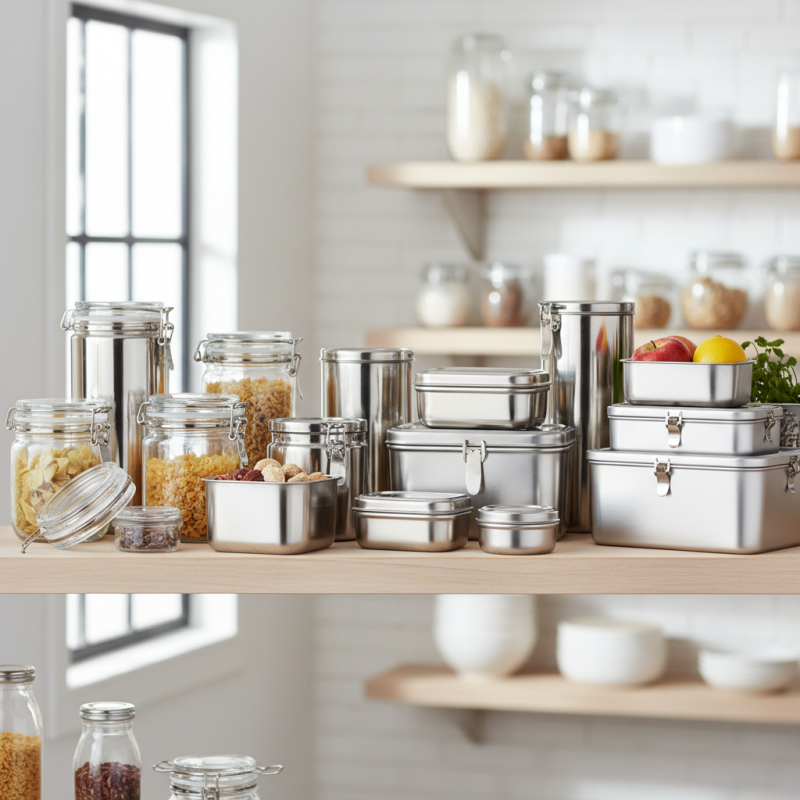
When it comes to food storage, metal containers offer durability and versatility. There are several types of metal containers that can enhance your food organization system, making it easier to keep your kitchen tidy and your ingredients fresh.
Stainless steel containers are among the most popular choices for food storage. They are resistant to rust and corrosion, making them an excellent option for both dry storage and refrigeration. Furthermore, their non-porous surface prevents odors from lingering, ensuring that your food maintains its original flavor.
For those looking for a lightweight yet sturdy option, aluminum containers are ideal. They are great for takeout or leftovers, as they are easy to seal and can often be placed directly in the oven. However, it’s important to note that aluminum containers may react with acidic foods, which can affect the taste and quality.
Tip: Always choose containers with airtight lids to extend the shelf life of your food. Additionally, label your containers with the contents and the date stored to keep track of freshness. By doing so, you can easily organize your food and minimize waste.
Factors to Consider When Choosing Metal Containers
When choosing metal containers for food storage and organization, several factors should be considered to ensure they meet your needs effectively. First, the material composition is crucial. Stainless steel is a popular choice due to its durability, resistance to rust, and ease of cleaning. Aluminum, while lightweight and often more affordable, may react with acidic foods, potentially altering their taste. Therefore, understanding the nature of the metals used can help you select containers that are safe for your particular food items.
Another important factor is the container design and size. Opt for containers that come in various sizes to accommodate different types of food, from bulk items to leftovers. Airtight lids are vital for preserving freshness and preventing contamination, while stackable designs can save space in your kitchen or pantry. Finally, consider the weight and portability of the containers if you plan to store or transport food frequently. A balance between sturdiness and weight can enhance the convenience of your metal containers, making them a practical solution for food storage and organization.
Popular Types of Metal Containers for Food Storage
Best Practices for Organizing Food in Metal Containers
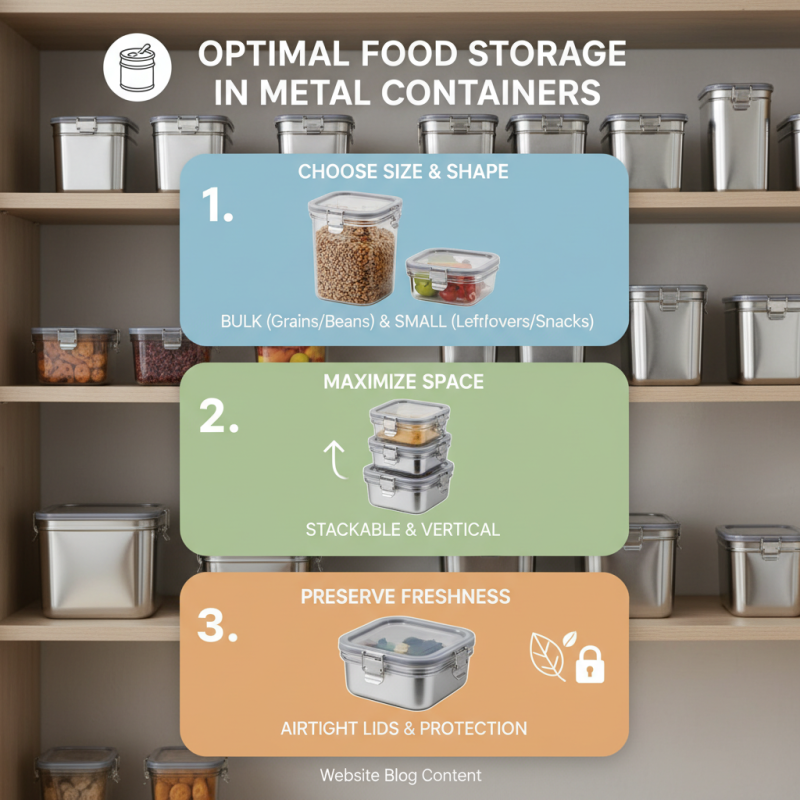
When organizing food in metal containers, the first step is to choose the right size and shape that suits your storage needs. Different foods require different types of containers—larger containers work well for bulk items like grains and dried beans, while smaller ones are ideal for leftovers or snacks. Ensure that the containers are stackable to maximize vertical space in your pantry or fridge, allowing for easier access and a more orderly appearance. Additionally, opt for containers with airtight lids to preserve the freshness of your food and prevent contamination.
Another best practice involves proper labeling. Even if metal containers come in distinct shapes or colors, labeling them can significantly simplify your organization process. Use a label maker or waterproof markers to indicate the contents and the date of storage. This not only helps in identifying items quickly but also ensures that you consume older items first, minimizing waste. Lastly, consider grouping similar food items together, such as all baking supplies in one container or snacks in another, to further streamline your food organization system. This structured approach will not only save you time but also enhance your efficiency in the kitchen.
Maintenance and Care Tips for Longevity of Metal Containers
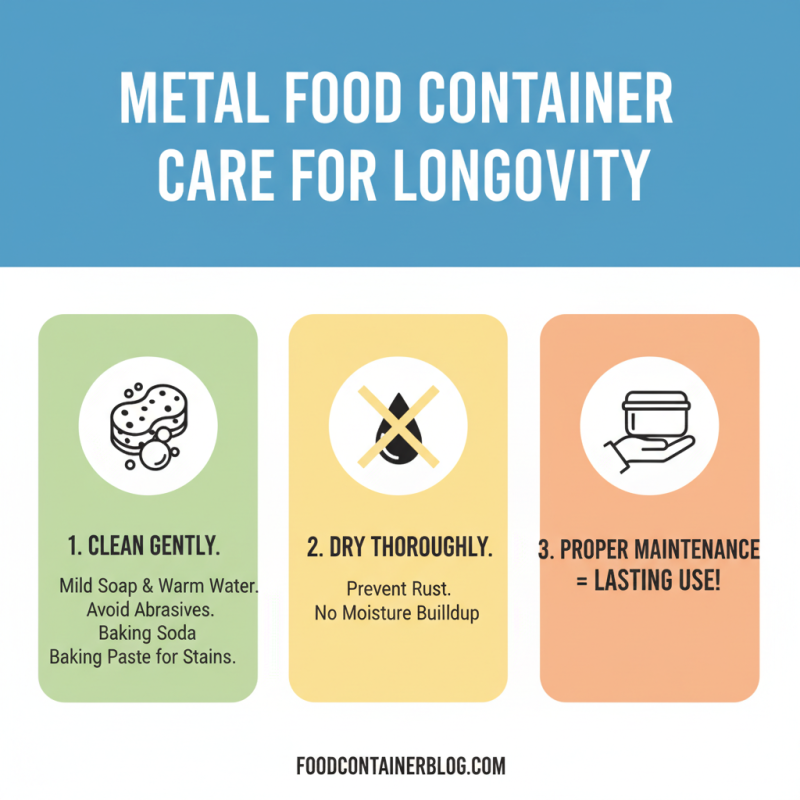
To ensure the longevity of metal containers used for food storage, proper maintenance and care are essential. First and foremost, it is vital to clean the containers correctly after each use. Use mild soap and warm water, avoiding abrasive cleaners that can scratch the surface. For stubborn stains, a paste made from baking soda and water can be an effective and safe alternative to harsh chemicals. After cleaning, thoroughly dry the containers to prevent moisture buildup, which can lead to rusting over time.
Another important aspect of maintaining metal containers is proper storage. It’s best to store them in a cool, dry place away from direct sunlight and excessive humidity. If your metal containers have lids, ensure they fit snugly to minimize air exposure, which can compromise the freshness of the food inside. Additionally, applying a light coat of food-safe mineral oil can help maintain their finish and provide a protective barrier against moisture. When using metal containers, try to avoid heating them directly unless they are specifically designed for that purpose, as excessive heat can warp or damage the material. Following these care tips will help keep your metal storage containers in excellent condition for years to come.



 +8618680445103