How to Choose Metal Tin Containers in 2026?
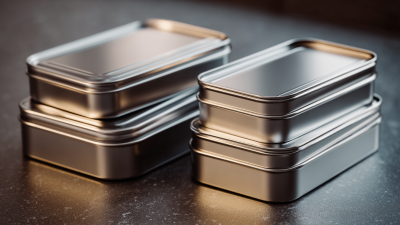
Choosing Metal Tin Containers in 2026 means matching the container to its contents, handling needs, and presentation—not simply picking a shape. A small tin for mints faces different demands from a deep container holding tea or a gift set. Check the usable interior dimensions, metal thickness, lid fit, and whether edges feel smooth. Small details matter.
For products that may contact food, ask suppliers for clear documentation about the material and interior coating, then confirm it suits the intended contents. Also inspect seams, hinges, and printed surfaces; a lid that loosens or a coating that scratches can undermine an otherwise attractive package. That matters. In practical sourcing, request a physical sample and test it with your product before placing a large order. Look for dents after ordinary packing and shipping, not just a flawless showroom finish.
Cost deserves attention, but the cheapest quote may leave out tooling, decoration, inserts, or freight. Compare specifications in writing, and ask how tolerances and quality checks are handled. A supplier’s answers should be specific enough to verify. Still, no checklist can replace seeing and handling the finished tin. I would not treat a polished mock-up as proof of consistent production; that assumption is easy to make, and worth questioning. This guide outlines the key factors, from size and material choices to customization and supplier evaluation, so you can make a more informed decision for 2026.
Define the Product, Purpose, and Storage Conditions
Choosing a metal tin starts with the product it must hold. Is it a dry ingredient, a small hardware part, or a delicate gift? Product size, weight, and sensitivity to moisture affect the tin’s dimensions, closure, and interior finish. Leave enough room for easy filling and removal; a container that looks compact on a screen may feel awkward in daily use. Small details matter. For products that touch food, request clear information about the lining and its intended use rather than assuming every metal surface is suitable. A lid should close evenly, without sharp edges or obvious gaps.
Purpose shapes the design. A tin opened several times a day needs a practical lid and a durable rim. A display container may place more value on a smooth finish and neat stacking. Consider where it will be stored: a damp pantry, a sunny shop window, or a warehouse with temperature changes. Metal can resist many everyday knocks, but it may dent, and unsuitable finishes can wear. Measure twice. It is easy to focus on appearance and overlook the route from filling line to shelf. Check sample dimensions, closure fit, and storage conditions before ordering in volume; one small mismatch can create avoidable handling problems. Some trade-offs remain, and the best choice depends on what the product actually needs.
Select Tinplate Type, Container Shape, and Capacity
How to Choose Metal Tin Containers in 2026?
Select Tinplate Type, Container Shape, and Capacity
Start with the tinplate construction. Tinplate is steel coated with a thin layer of tin, but thickness and coating details can vary. Ask suppliers for specifications and samples, then check whether the container suits your product and filling process. For contents that need extra protection, discuss interior coatings and compatibility with a qualified packaging professional. A shiny finish alone proves little.
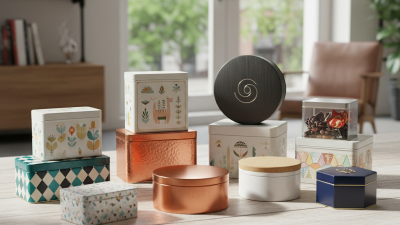
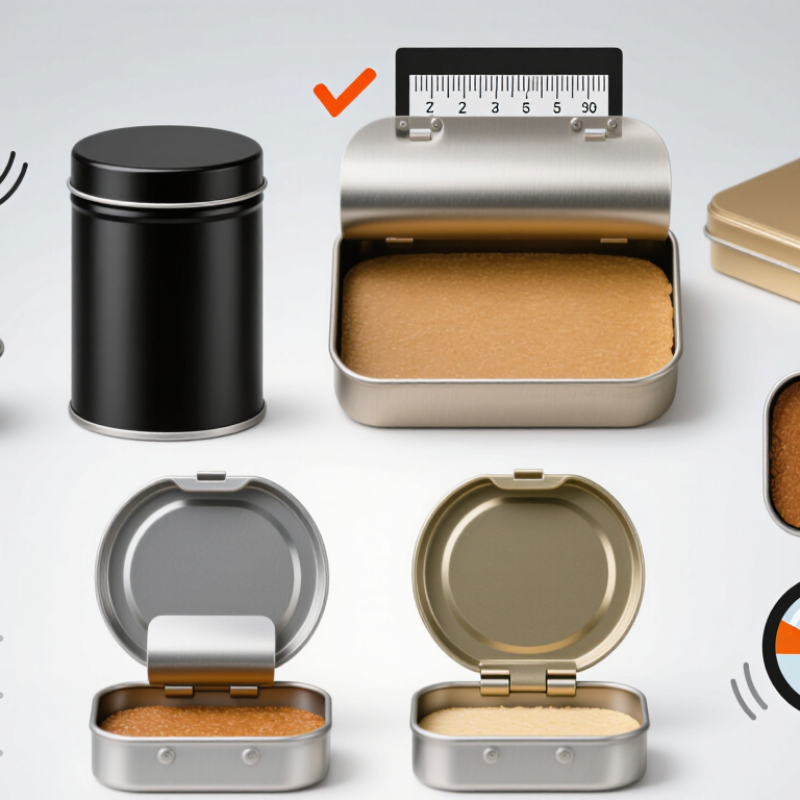
Shape affects more than appearance. Round tins stack neatly and work well for powders, candies, or small household items. Rectangular containers use shelf space efficiently and can fit folded goods. Shallow shapes make contents easy to see, while deep tins may need inserts to stop small items rattling. Capacity should include usable space, not just the container’s outside dimensions. Measure the actual product, including any wrapping or headroom needed for closure. I have seen buyers focus on volume and miss the opening size; that choice can make filling awkward.
Tips: Test a filled sample before ordering. Check lid fit, edge finish, and how easily the contents come out. Compare a few sizes side by side. The “perfect” option may still need a small compromise.
Compare Closures, Linings, and Product Protection
When choosing metal tin containers, compare how each closure behaves in daily use. A screw-top can provide a more controlled fit, while a slip lid is quick to remove but may loosen after repeated handling. Hinged lids stay attached, which helps during frequent opening. Small details matter. Check whether the lid catches smoothly, and whether users can close it without forcing the edge.
The interior lining should suit the product, not just look clean. An unlined tin may work for dry items, but moisture, oils, or acidic contents can affect the metal or product quality. Coatings differ, so ask the supplier for compatibility information and relevant food-contact documentation when needed. A sample can still fool you. A glossy finish does not prove that the lining will perform well over time.
Product protection also depends on the route from filling to use. Consider stacking pressure, bumps in transit, humidity, and repeated opening. A close-fitting lid may help limit dust and spills, but it should not be assumed to create an airtight seal. Test filled samples under realistic storage conditions; inspect for dents, loose closures, odor changes, or coating wear. I would not choose by hand feel alone. Even a neat-looking tin can disappoint after a few weeks.
Check Safety, Regulatory, and Sustainability Requirements
When choosing metal tin containers in 2026, check the finished package, not only the sheet metal. For food contact, ask for test results covering the interior coating, seams, and intended contents. Confirm the tests reflect actual filling temperatures and storage time. “Food-grade” alone is not enough. Requirements differ by market: US buyers should check applicable FDA rules, while EU sales involve Regulation (EC) No 1935/2004 and good manufacturing practice requirements. Keep declarations, test reports, and batch traceability together.
Coatings matter. Request migration testing for the specific product and use conditions, plus clear documentation of any coating changes. A practical detail: a container tested for dry biscuits may not suit oily or acidic foods. That distinction is easy to miss. Ask suppliers how they control coating application and inspect seams; a certificate cannot replace production checks.
Sustainability claims need evidence, too. APEAL’s 2023 report put Europe’s 2022 steel packaging recycling rate at 80.5%. The US EPA’s 2018 materials report recorded a 63.6% recycling rate for steel packaging. Different years and systems, so do not compare them as if they were identical. Check local collection access, recycled-content documentation, and whether coatings or attached components affect sorting. I would not treat a recycling symbol as proof. Recyclability depends on the local system and the actual package design.
How to Choose Metal Tin Containers in 2026?
Check safety, regulatory, and sustainability requirements
Use recyclability and end-of-life performance as part of your supplier review. These EU targets apply to packaging waste by weight; they are not individual product certification thresholds. Also verify that the container and any internal coating are suitable for the intended food or product, and check applicable food-contact rules in your sales markets.
Source: EU Packaging and Packaging Waste Directive 94/62/EC, as amended (Annex targets for 2025 and 2030).
Evaluate Manufacturers, Samples, Costs, and Lead Times
How to Choose Metal Tin Containers in 2026?
Evaluate Manufacturers, Samples, Costs, and Lead Times
For a dependable tin container, assess the factory’s process, not just its catalogue. Ask about metal thickness, coating, seam construction, print tolerances, and inspection records. Request recent production photos and a written defect policy. A capable supplier should explain which specifications affect price and performance. Details matter.
Order samples in the intended size, finish, and decoration. Check lid fit, sharp edges, odor, coating consistency, and how containers stack after filling. A hand-finished sample may not represent a production run, so confirm whether it uses production tooling. A polished sample can still hide a weak seam. The Association of European Producers of Steel for Packaging’s 2023 report, drawing on Eurostat data, reported an 80.5% steel-packaging recycling rate in Europe for 2022. Material and local collection systems still shape real-world outcomes.
Tip: Compare landed cost, not unit price alone. Include tooling, plate changes, freight, duties, packing, and rejected units. Request quotes at several order quantities, with payment terms and price validity. Get a dated schedule covering artwork approval, tooling, sample sign-off, production, and shipping. Lead times vary with season and factory workload. Ask the supplier to identify the schedule’s critical path and confirm updates in writing. There is no universal “fast” timeline. If an estimate seems unusually short, ask what could delay it. Keep a buffer. It is easy to overlook.



 +8618680445103