What is Food Metal Can and Why is it Important?
In the world of food packaging, the Food Metal Can stands out as a crucial component. This container, often made from steel or aluminum, plays a vital role in preserving the freshness and safety of food products. The use of metal cans dates back over a century. They have evolved significantly in design and functionality.
Food Metal Cans offer multiple advantages. They are resistant to light, oxygen, and moisture. This durability helps extend the shelf life of various food items. Additionally, these cans are recyclable, contributing to environmental sustainability. However, reliance on such packaging can lead to a disconnect. Consumers may overlook the importance of recycling. They may also be unaware of the potential food waste generated from improperly canned goods.
While Food Metal Cans serve a practical purpose, their significance extends beyond practicality. They embody a blend of convenience and responsibility. Recognizing this balance is essential. Ultimately, the Food Metal Can is not just a container; it is a symbol of our food culture and environmental choices.
Definition of Food Metal Can: What It Is and Its Composition
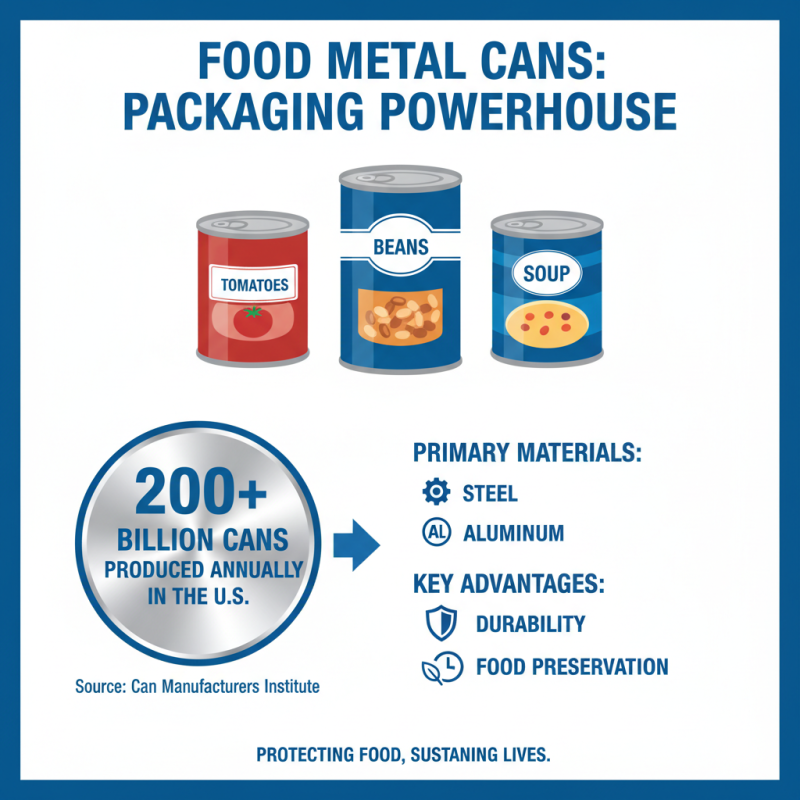
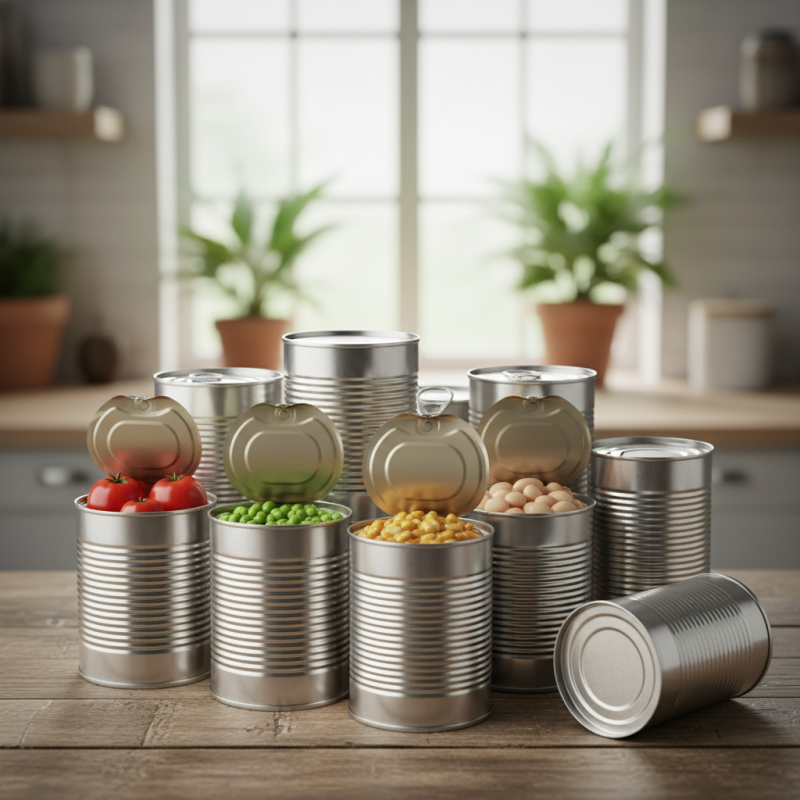
Food metal cans are widely used for packaging a variety of food products. They consist primarily of steel or aluminum. These materials are chosen for their durability and ability to preserve food. According to the Can Manufacturers Institute, over 200 billion cans are produced each year in the United States alone.
Steel cans typically contain about 25% recycled metal. This recycling process plays a vital role in reducing waste. However, the recycling rates for aluminum cans stand at nearly 50%, which highlights an area needing improvement. Many cans are still thrown away instead of being recycled, indicating a gap in consumer awareness.
Metal cans are also lined with a protective coating to prevent corrosion. Although this lining is effective, concerns about potential chemical leaching remain. Research shows that certain linings can contain BPA, which can be harmful in some studies. Striking a balance between safety and performance is crucial for manufacturers. It is clear that while food metal cans are vital for food preservation, both their composition and recycling remain critical topics for discussion.
Historical Background: The Evolution of Food Metal Cans
The origin of food metal cans dates back to the early 19th century. French inventor Pierre Durand introduced them as a way to preserve food. Initially, these cans were made from iron and sealed with soldering. This method was labor-intensive and not very practical. Still, it paved the way for innovation.
Over time, the design evolved. By the 20th century, manufacturers began using tin plate, which was lighter and rust-resistant. The introduction of the can opener revolutionized accessibility. Canning became popular during wartime due to its convenience. Soldiers relied on canned food for nutrition and sustenance.
Despite their advantages, challenges arose. Early cans were sometimes toxic due to improper sealing or materials. Modern processes improved safety, but concerns still exist. Not all cans are recyclable, and waste management remains an issue. Understanding the evolution of food metal cans helps reflect on both their benefits and drawbacks.
What is Food Metal Can and Why is it Important? - Historical Background: The Evolution of Food Metal Cans
| Year |
Event |
Significance |
Key Developments |
| 1810 |
First Food Can Patent Issued |
Marked the beginning of canned food. |
Nicolas Appert's method of preserving food. |
| 1858 |
Introduction of Key Opening Device |
Facilitated easier consumption of canned food. |
The can opener was patented. |
| 1930s |
Advent of Lightweight Aluminum Cans |
Reduced shipping costs and improved shelf life. |
Aluminum was used for beverage cans. |
| 1950s |
Explosive Growth in Canned Food Industry |
Canned food becomes a staple in households. |
Food preservation technologies improved. |
| 2000s |
Sustainability and Eco-friendly Packaging |
Focus on recyclability and environmental impact. |
Introduction of more recyclable materials. |
Benefits of Using Metal Cans for Food Preservation
Metal cans play a vital role in food preservation. They provide a robust barrier against light, air, and moisture. This helps maintain the quality and freshness of the contents. Unlike glass or plastic, metal cans are less likely to break or leak. They can withstand high temperatures during processing, making them a safe choice for various foods.
Using metal cans also has environmental benefits. They are fully recyclable, reducing waste in landfills. The recycling process is efficient and uses less energy than producing new cans. However, the recycling system works best when cans are disposed of properly. Many people still throw cans in regular trash, which leads to unnecessary waste.
While metal cans are effective, they do come with some drawbacks. For example, the lining in cans may contain chemicals. They can also have a metallic taste if stored for too long. Many consumers are unaware of these issues. Educating the public about proper usage could improve their experience with canned foods. This could also encourage more sustainable practices in food packaging.
Environmental Impact: Recycling and Sustainability of Metal Cans
Metal food cans play a vital role in sustainable packaging. They are easily recyclable, with around 70% of metal cans being recycled in the U.S. Recycling metal reduces the need for new raw materials. This conserves energy and reduces greenhouse gas emissions. For every ton of aluminum recycled, we save 8 tons of carbon dioxide emissions.
The environmental impact of metal cans extends beyond recycling. The production process consumes less water and energy compared to plastic. Metal cans can store food for years, reducing food waste. However, not all cans are recycled efficiently. Many end up in landfills, where they can take decades to decompose.
Tips: Always rinse out your cans before recycling. Clean cans are easier to process. Check local guidelines for recycling—some regions have specific rules. Educate others about the importance of recycling. Greater awareness can lead to increased recycling rates. The more people involved, the better for our planet.
Environmental Impact of Metal Cans: Recycling Rates and Sustainability
Future Trends: Innovations in Food Metal Can Technology
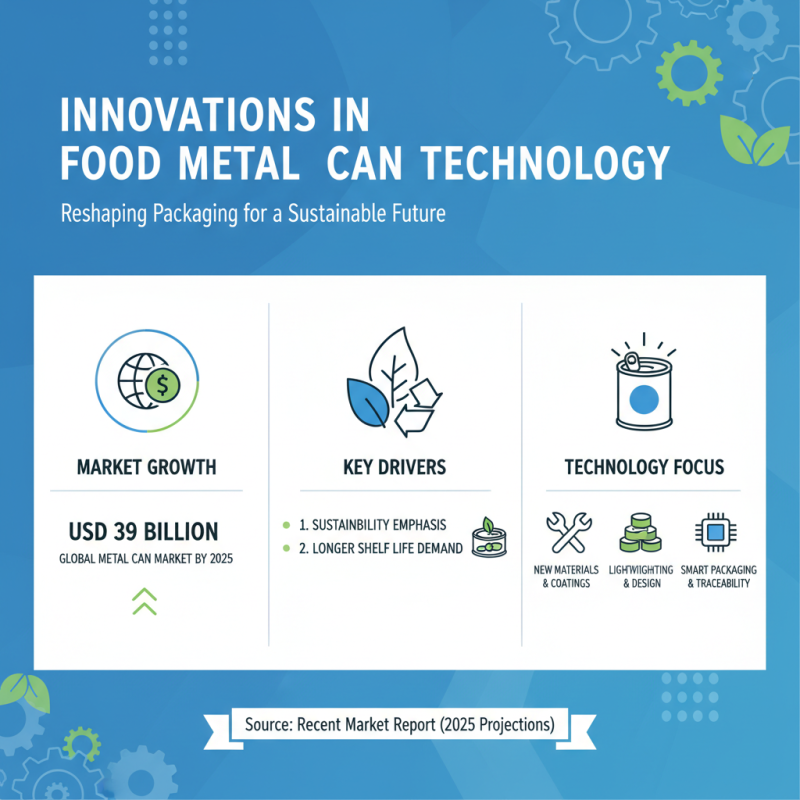
Innovations in food metal can technology are reshaping the packaging landscape. According to a recent market report, the global metal can market is expected to reach USD 39 billion by 2025. This growth is driven by the emphasis on sustainability and the demand for longer shelf life.
One notable trend is the development of high-barrier coatings. These coatings enhance durability and preserve freshness. They reduce the permeability of gases, which helps maintain the quality of contents. In addition, manufacturers are exploring lightweight designs. Thinner metal structures decrease material usage and shipping costs. This focus on efficiency is essential as companies face pressures to reduce their carbon footprint.
However, challenges remain. Recycling rates for metal cans vary across regions. In some areas, infrastructure is lacking. Many consumers still lack awareness of proper recycling practices. This could hinder the overall impact of innovations. Continuous education and partnerships with local communities are crucial to improve recycling rates. Investments in technology must also address these gaps to ensure a sustainable future for food metal cans.



 +8618680445103