 +8618680445103

Free Standard Samples can be provided for you to check the quality.
Leave Your Message


Food Cans help manufacturers protect shelf-stable foods during storage and transport, but choosing a supplier involves more than comparing unit prices. FAO’s 2023 report estimated that 13.2% of food was lost after harvest and before retail in 2021. Reliable packaging cannot prevent every loss, yet consistent can dimensions, sound seams, and suitable internal coatings can support dependable production and product protection.
China offers buyers a broad supplier base, from large-scale can makers to specialized packaging factories. The challenge is verifying what each supplier can consistently deliver. APEAL reported an 80.5% steel packaging recycling rate in Europe for 2022, a useful reminder that material choices and end-of-life systems matter to packaging decisions. That figure is regional, however; it does not describe recycling performance in every export market.
Details matter. This guide compares Chinese Food Cans suppliers through practical checks: material specifications, production capacity, quality-control records, sample evaluation, and export experience. Buyers should ask how suppliers monitor can-body dimensions, coating application, and seam quality, then confirm that samples run properly on their filling lines. Documentation also deserves careful review, especially when products will enter different markets. Not every claim travels.
A supplier’s website may look polished, while its production records tell a more useful story. Even so, no checklist replaces factory assessment and product-specific testing. The best choice depends on the food, filling process, order volume, and destination. This comparison offers a starting point—not a guarantee—and encourages buyers to verify claims before committing to large orders.
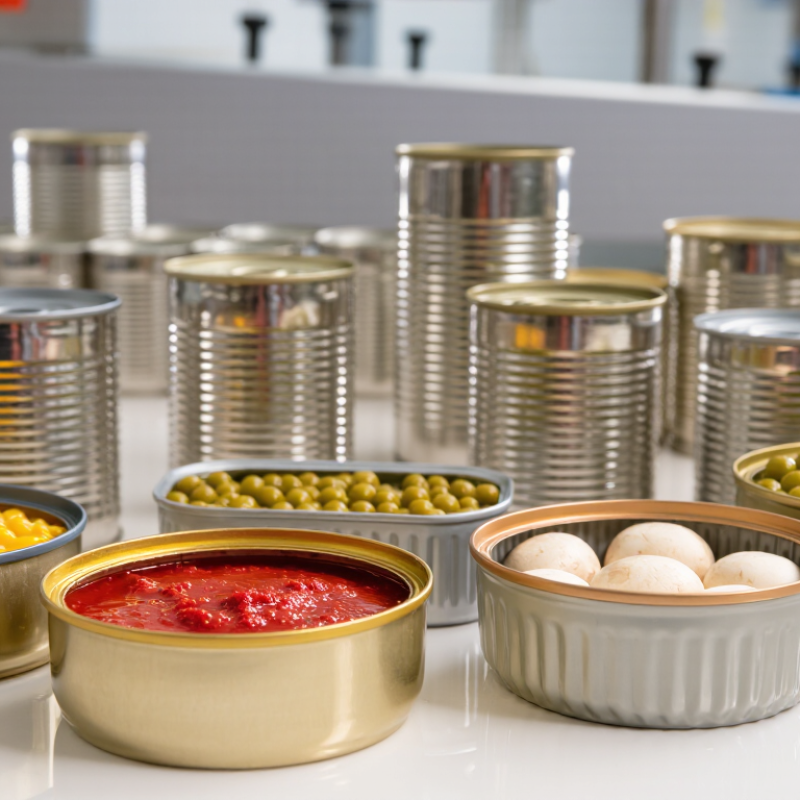
Two-piece cans form the body and base from one metal blank, then receive a separate end. Their smooth sidewalls have no vertical body seam. This design can suit products and production lines that support drawing, though available sizes and shapes may be more limited. Three-piece cans use a formed body with a welded side seam and separately attached ends. They offer flexibility in height and diameter for varied pack sizes. The seam needs careful coating and inspection. Retort conditions, product acidity, and filling methods all affect the specification. No format wins every time.
When comparing suppliers in China, ask for drawings, metal thickness ranges, coating details, and seam specifications for each format. Request samples from a production run, not only display pieces. Check dimensions, coating coverage, and double-seam measurements against documented inspection records. For heat-processed foods, confirm that the can design suits the planned process and filling conditions. These checks can help reduce the risk of leakage, corrosion, or paneling during storage. A common mistake is choosing by unit price alone. Tooling, shipping, and compatibility with your filling line can change the real cost. Paperwork helps, but it is not proof by itself; verify samples and agree on tolerances before placing a large order.
| Comparison Dimension | 2-Piece Food Can | 3-Piece Food Can | Buyer Considerations |
|---|---|---|---|
| Basic Construction | Formed from one piece for the can body and bottom, with a separate top end attached by double seaming. | Made from a body sheet formed into a cylinder, plus separate top and bottom ends attached by double seaming. | Confirm the proposed format against the product, filling method, processing conditions, and packaging line. |
| Common Forming Method | Typically made by drawing and redrawing or drawing and ironing, depending on the material and can design. | The body sheet is rolled into a cylinder and joined at a side seam, commonly by welding; ends are then seamed on. | Ask for the body-material and seam construction details, as manufacturing methods vary by specification. |
| Typical Food Applications | May be used for products such as tuna, meat, pet food, and other foods, depending on can depth and design. | Commonly used for products such as vegetables, fruit, soups, sauces, beans, and other canned foods. | These are common applications, not fixed rules; the appropriate design depends on product and process requirements. |
| Body Geometry | Often has a seamless body and may be designed with a round or shaped profile, subject to tooling and production capability. | Usually has a cylindrical body with a visible side seam; round formats are widely used. | Provide the required diameter, height, capacity, and shape. Check whether the dimensions are internal or external. |
| Seam Configuration | One double seam joins the top end to the body; the bottom is integral with the body. | Double seams join both ends to the body, and the body also has a side seam. | Request seam specifications and inspection criteria appropriate to the can size and intended application. |
| Material Options | May be produced from suitable steel or aluminum can stock, depending on the design and product requirements. | Commonly produced from steel packaging sheet; material and coating choices depend on the product and process. | Specify the material, thickness, internal coating, and external finish. Confirm food-contact compliance for the destination market. |
| Internal Protection | May use an internal coating selected to help protect the product and can material. | May use an internal coating across the body and ends; coating details should account for the side seam and product exposure. | Share product acidity, salt content, storage conditions, and processing details so coating compatibility can be evaluated. |
| Production and Line Fit | Requires compatible filling and seaming equipment for the selected can dimensions and end type. | Requires compatible filling and seaming equipment; the side seam and both end seams are part of the package design. | Confirm line speed, conveying, filling method, seamer tooling, and changeover requirements before ordering. |
| Retort or Heat Processing | Can be designed for thermal processing when the material, seams, coating, and package specifications are suitable. | Can also be designed for thermal processing when the full package construction and seams are suitable. | Validate the complete package under the intended processing schedule; can format alone does not establish retort suitability. |
| Artwork and Labeling | Can use printed or coated exterior finishes, or a separate label, subject to the chosen specification. | Can use printed or coated exterior finishes, or a separate label; artwork should account for the side-seam area. | Confirm print area, color requirements, barcode placement, language, and applicable labeling regulations. |
| Samples and Quality Checks | Evaluate dimensions, coating condition, end fit, and double-seam performance using agreed specifications. | Evaluate dimensions, body side seam, coating condition, and both double seams using agreed specifications. | Agree on drawings, inspection methods, acceptable tolerances, sampling plans, and pre-production approval. |
The comparisons are general packaging guidance. Final can selection and food-contact suitability should be confirmed with the manufacturer and validated for the product, filling process, thermal process, and destination-market requirements.