
+8618680445103
Tin Boxes remain practical packaging products for confectionery, tea, cosmetics, gifts, and specialty retail. Their rigid structure protects contents during transport and gives brands a durable surface for printing, embossing, and seasonal designs. According to Smithers’ metal packaging research, demand continues to benefit from recyclability, product protection, and premium presentation. These factors matter to global buyers comparing manufacturers across different markets.
The companies featured in this guide are evaluated through a buyer-focused lens. Production capacity, tinplate quality, tooling capability, decoration standards, minimum order quantities, and export experience all deserve attention. Grand View Research identifies sustainability and packaging performance as important forces shaping the wider metal packaging industry. However, recycled content, coating systems, and recycling infrastructure can vary significantly by country. A factory’s environmental claim should therefore be verified through technical documents, certifications, and current audit records.
No ranking is perfect. A large manufacturer may not suit a small retailer. A smaller supplier may offer better communication or more flexible sampling. Buyer experience often reveals details that a catalog hides, such as lid fit, corner sharpness, color consistency, and carton strength after ocean shipping. This overview of the Top 10 Tin Box Manufacturers for Global Buyers is designed to support careful comparison, not replace due diligence. Readers should request samples, confirm food-contact compliance where relevant, review inspection procedures, and clarify Incoterms before placing an order. The strongest choice is not always the cheapest one. It is the supplier that can repeatedly deliver safe, attractive, and specification-matched Tin Boxes.
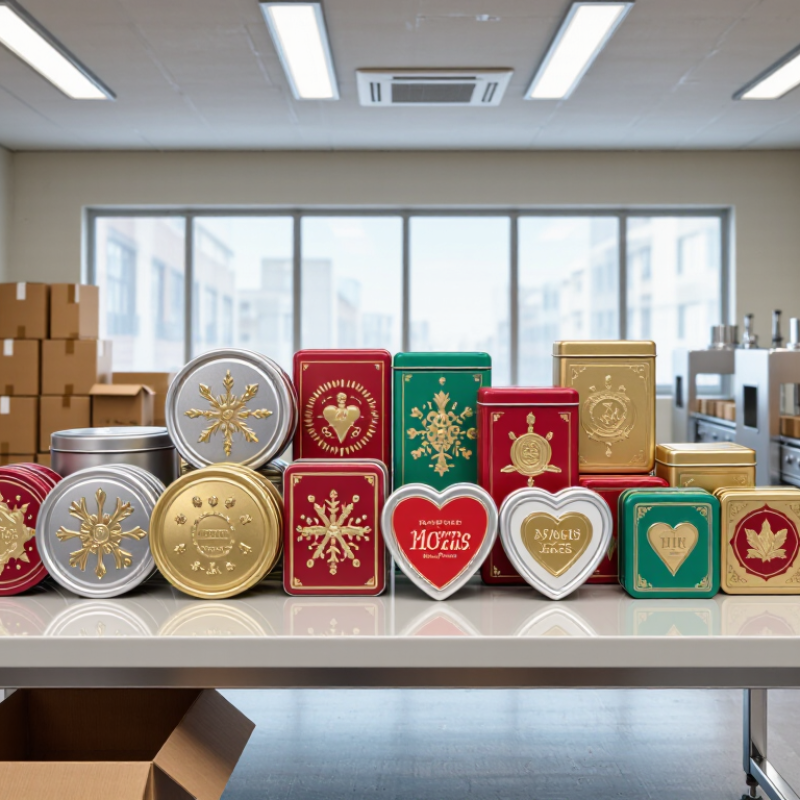
Top 10 Tin Box Manufacturers for Global Buyers
A leading tin box manufacturer offers more than attractive packaging. It controls material quality, production accuracy, and delivery performance. Experienced buyers should request tinplate specifications, coating details, and factory quality records. These documents reveal whether the supplier follows a stable process or simply promises one.
Reliable manufacturers use calibrated equipment and inspect every production stage. They check dimensions, lid fitting, sharp edges, color consistency, and print adhesion. A practical sample should survive stacking, handling, and ordinary transport. Food-related packaging also requires suitable coatings and verified compliance documents. Testing should come from credible laboratories, not only internal claims. Clear communication matters too. Engineers should explain tooling limits, minimum quantities, and realistic production times.
Customization is another important measure. Strong suppliers can manage embossing, unusual shapes, hinged lids, and recyclable materials without hiding technical risks. However, no factory is flawless. A beautiful prototype may still develop scratches during mass production. I have found that honest suppliers discuss these weaknesses early. They suggest protective films, revised tolerances, or better packing methods. Global buyers should also review audit access, export experience, replacement policies, and response speed. Low pricing can be useful, but unexplained savings deserve careful questions. A dependable manufacturer leaves a clear paper trail from raw material to shipment.

Top 10 Tin Box Manufacturers for Global Buyers: Key Manufacturing Capabilities and Product Specializations
The strongest tin box manufacturers combine precision forming, dependable printing, and flexible order volumes. Their factories typically use automated stamping lines, multi-color lithography, laser welding, and food-safe internal coatings. Some specialize in hinged gift boxes, while others focus on rectangular tins, round containers, or custom promotional packaging. According to the International Tin Association’s Tin Use Review 2023, tinplate represents roughly 12% of global tin consumption. This supports steady demand for decorative and functional metal packaging.
Manufacturing depth matters more than attractive samples. Buyers should examine tooling control, metal thickness, closure accuracy, and color consistency between batches. A capable supplier can provide digital proofs, pilot samples, and documented drop testing. ISO 9001 certification can indicate process discipline, but it does not guarantee perfect production. The World Packaging Organisation continues to identify recyclability and material efficiency as major packaging priorities. Therefore, manufacturers using recyclable steel, low-waste stamping, and efficient nesting deserve closer attention. Small details matter. A loose lid can damage an otherwise excellent product.
Tips: Request a capability sheet before requesting prices. Check minimum order quantities, mold ownership, coating compliance, and carton testing. Ask for recent production photos, not only showroom samples. Compare defect rates and lead times, because the cheapest quotation may hide slower tooling or weaker inspection. I have found that clear artwork rules prevent many avoidable delays. Still, every factory should be audited against your own product risks.
| Rank | Anonymous Manufacturer Profile | Primary Manufacturing Region | Core Product Specialization | Typical Tinplate Thickness | Key Forming Capabilities | Printing and Finishing | Common Compliance Support | Best Fit for Global Buyers |
|---|---|---|---|---|---|---|---|---|
| 1 | Manufacturer Profile A | South China | Large-volume food, confectionery and promotional tin boxes | 0.18–0.35 mm | Deep drawing, stamping, curling, beading and multi-part assembly | Offset lithography, matte or gloss varnish, embossing and spot effects | Food-contact documentation, restricted-substance declarations and factory audits | Retail launches, seasonal packaging and high-volume private-label programs |
| 2 | Manufacturer Profile B | East China | Tea tins, coffee tins, spice containers and dry-food packaging | 0.18–0.30 mm | Rectangular, square, round and hinged-lid construction | Four-color printing, internal lacquer, embossing and tamper-evident options | Migration testing, coating declarations and packaging-material documentation | Food and beverage brands requiring printed metal packaging |
| 3 | Manufacturer Profile C | Northern China | Gift tins, collectible packaging and premium promotional containers | 0.20–0.40 mm | Complex stamping, shaped lids, window cutting and insert assembly | Embossed graphics, metallic inks, textured varnish and decorative handles | Material traceability, quality inspection reports and export packaging controls | Premium gifts, corporate promotions and limited-edition packaging |
| 4 | Manufacturer Profile D | Western Europe | Luxury confectionery, biscuit and specialty-food tins | 0.18–0.30 mm | Precision stamping, tight lid tolerances and automated assembly | High-resolution lithography, premium varnishes, embossing and debossing | EU food-contact framework support, supplier declarations and quality-system audits | Premium European retail and high-finish food packaging programs |
| 5 | Manufacturer Profile E | South Asia | Traditional tea caddies, spice tins and artisan-style packaging | 0.20–0.40 mm | Round forming, solder-free seams, slip lids and manual finishing | Printed tinplate, brushed finishes, embossed motifs and paper-label application | Food-contact declarations, pre-shipment inspection and export documentation | Tea, spice, gourmet-food and culturally themed packaging |
| 6 | Manufacturer Profile F | Southeast Asia | Small and medium promotional tins for export markets | 0.18–0.30 mm | Basic stamping, hinged lids, sliding lids and simple component assembly | Offset printing, protective coating, basic embossing and adhesive labels | General product testing, material declarations and buyer inspection support | Cost-sensitive orders, promotional campaigns and regional distribution |
| 7 | Manufacturer Profile G | North America | Specialty food, collectibles and short-run custom tins | 0.20–0.40 mm | Standard-body stamping, prototype tooling and short-run assembly | High-quality printed panels, digital proofing and selective embossing | Domestic packaging requirements, food-contact documentation and retailer audits | Short lead times, limited editions and North American fulfillment |
| 8 | Manufacturer Profile H | Central Europe | Industrial, technical and reusable metal containers | 0.23–0.49 mm | Heavy-gauge stamping, welded components, tight-seal lids and protective inserts | Industrial coatings, label application and abrasion-resistant finishes | ISO-based quality systems, technical drawings and product traceability | Hardware, technical parts, maintenance products and reusable packaging |
| 9 | Manufacturer Profile I | East Asia | Precision tins for cosmetics, stationery and lifestyle products | 0.18–0.30 mm | Fine-detail stamping, small-format forming, hinged lids and fitted interiors | Fine-line printing, color matching, soft-touch varnish and decorative textures | Material safety declarations, cosmetic-packaging documentation and inspection records | Compact premium products, beauty accessories and stationery collections |
| 10 | Manufacturer Profile J | Mediterranean Region | Olive-oil, confectionery, gift and regional specialty-food tins | 0.20–0.40 mm | Round and rectangular forming, friction-fit lids, handles and pouring features | Lithographic printing, food-safe internal coating, embossing and high-gloss finishes | Food-contact declarations, coating information and export-market labeling support | Gourmet foods, regional products, hospitality gifts and specialty retail |
Note: Thickness ranges and capability descriptions represent commonly available industry specifications for tinplate packaging. Final specifications, minimum order quantities, tooling requirements, testing documents and certifications should be confirmed directly with each shortlisted supplier.
The leading tin box manufacturers are concentrated in East and South Asia, with smaller groups across Europe and North America. Mordor Intelligence’s 2024 tin packaging analysis identifies Asia-Pacific as the largest market, supported by extensive metal-processing capacity and strong export networks. Several industry estimates place its share above 40 percent, although the exact figure changes by product definition.
China remains a major manufacturing center, especially for printed tins, hinged boxes, and custom shapes. India is gaining attention through competitive labor costs and expanding packaging infrastructure. European producers are fewer, but they often compete through premium finishes, food-contact documentation, and shorter regional delivery routes. North American suppliers generally serve domestic and nearby markets, reducing transoceanic freight exposure.
Trade data from UN Comtrade shows strong international movement in metal containers under HS codes 731021 and 731029. Yet these codes include products beyond decorative tin boxes. That limitation matters. A ranking based only on export value can overlook smaller factories with better tooling or quality control. In practical sourcing, buyers should inspect wall thickness, lid fit, coating consistency, and carton protection. I have found that samples reveal weaknesses quickly. Still, sample performance may not represent full production. Regional rankings should therefore combine capacity, verified certifications, delivery records, and factory audits. The picture is useful, but not perfect.
Top 10 Tin Box Manufacturers for Global Buyers
Quality, Compliance, Customization, and Production Evaluation
Choosing among the top 10 tin box manufacturers requires more than comparing prices. Experienced buyers inspect tinplate thickness, seam strength, lid fit, coating consistency, and surface finish. A reliable supplier should provide material certificates, production samples, inspection records, and traceable batch information. Small details matter. A lid that closes unevenly can damage products during shipping.
Compliance must match the product’s destination and intended use. For food-related packaging, request suitable coating declarations, migration test reports, and ink safety documentation. For general products, confirm applicable packaging, labeling, recycling, and chemical requirements. Do not accept vague statements such as “international standard.” Ask which standard, which test method, and which laboratory issued the report. Documents should be current and easy to verify.
Customization also needs production evidence. Review color samples under different lighting, confirm artwork tolerances, and test embossed areas for sharp edges or distortion. Ask about mold ownership, minimum order quantities, tooling charges, and replacement policies. Production capacity should be checked through machine lists, staffing, lead-time records, and quality-control procedures. I once trusted a neat sample too quickly. That was my mistake. The final run showed weaker corner protection and slight color variation. A pilot order, pre-shipment inspection, and written acceptance criteria can reduce that risk, although they cannot remove every uncertainty.
This non-company-specific benchmark illustrates a practical buyer evaluation model for tin box manufacturers. Quality and compliance receive the highest weighting, followed by customization and production capability, because these factors directly affect product safety, consistency, market access, and scalable supply.
Choosing among the top 10 tin box manufacturers requires more than comparing catalog prices. Global buyers should examine material thickness, dimensional tolerance, printing accuracy, and production consistency. Smithers’ 2024 metal packaging outlook projects roughly 3% annual market growth through 2028, increasing pressure on factories to deliver stable quality at scale.
Ask each manufacturer for recent inspection records, sample boxes, and documented production capacity. A practical test is simple: check whether the lid closes evenly, corners remain sharp, and the printed surface survives rubbing. Request food-contact declarations when relevant, plus certificates for quality management and responsible sourcing. ISO 9001 certification can support process control, but it does not replace independent inspection.
Delivery performance also matters. Compare tooling fees, minimum order quantities, lead times, carton protection, and port options in one spreadsheet. The World Bank’s Logistics Performance Index shows that international delivery reliability varies widely across markets, so a low factory price may hide expensive delays. I would also audit communication speed. Slow answers often become slower corrective actions. This is not always true, but ignoring it is risky. A small pilot order can reveal more than a polished factory presentation.