
+8618680445103
Metal containers serve far more purposes than holding food or drinks. They protect medicines, paints, oils, household products, and industrial materials. Their strength, barrier performance, and ability to withstand handling make them valuable across many sectors. Yet no single container suits every product.
For this overview, Maya Chen is presented as a fictional Container Metal packaging specialist, and the following line is an illustrative quotation, not a sourced statement: “The right metal package protects its contents while fitting the product, process, and user.” It is a useful principle, though real purchasing decisions require product-specific testing.
The article will examine common types, including steel food cans, aluminum beverage cans, aerosol cans, metal drums, pails, and decorative tins. Each has distinct design features. A steel can may offer a sturdy barrier for foods, while a lightweight aluminum can is familiar in beverage distribution. Drums and pails handle larger volumes. Small tins suit products that need a compact, durable package.
Details matter. Coatings, seams, closures, dimensions, and compatibility with the contents can affect performance. A container that looks ideal on a shelf may prove inconvenient during filling or transport. That deserves a second look. The sections ahead compare key uses and practical trade-offs, helping readers identify which Container Metal format may fit a particular need. Actual specifications should always be confirmed with qualified suppliers and tested for the intended product.
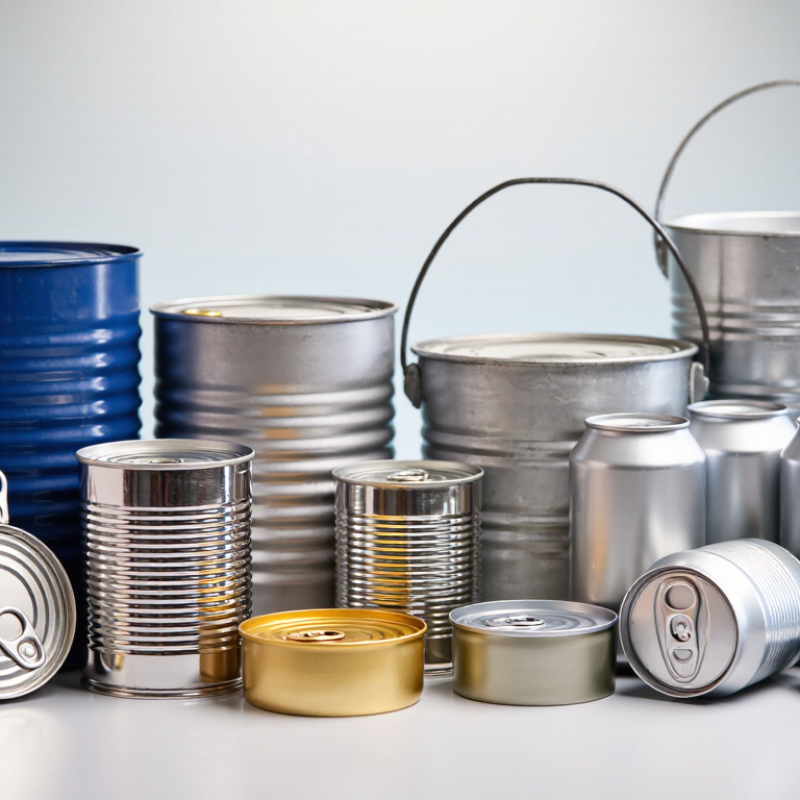
Metal containers are commonly classified by both material and shape. Steel, often coated with a thin layer of tin, suits rigid food cans, paint cans, and large drums. It is strong and resists denting, but the coating and seams matter when contents could react with the metal. Aluminum is lighter and easy to form, so it is common in beverage cans, trays, and shallow containers. The material alone does not determine performance; wall thickness and closure design count, too.
Shape signals how a container is handled. Cylindrical cans stack efficiently and tolerate internal pressure. Pails have wide openings for filling and scooping, while drums support bulk storage and transport. Rectangular tins use shelf space neatly, though corners can be more vulnerable to damage. Shape matters. In practice, product requirements often blur these categories: a “can” may describe several forms, not one precise design.
Recycling data also helps explain why material classification matters. APEAL’s 2022 report put Europe’s steel packaging recycling rate at 82%; Metal Packaging Europe reported 80.5% for metal packaging in Europe that year. These figures cover different industry groupings, so they are not directly interchangeable. They also describe regional recycling outcomes, not a guarantee that every container will be recycled. Not always. Check the local collection system, and consider coatings, lids, and mixed-material parts when specifying a container.

Steel cans protect food through a rigid body, sealed seams, and, when needed, a food-contact lining. Many hold vegetables, soups, sauces, or powdered goods. The lining helps limit contact between the contents and metal, especially when foods are acidic. It must remain intact.
A can’s strength is useful in kitchens and pantry storage. It stacks neatly, resists crushing better than many lightweight packages, and blocks light. For beverages, steel cans can contain carbonated drinks under pressure, provided their design and seams are made for that purpose. Not every steel container is suitable for every liquid. Check the intended use.
For general storage, empty cans can hold small dry items such as screws, tea bags, or craft supplies. Keep them clean and completely dry to reduce rust. Avoid using cans with sharp, damaged edges or deep dents near the seams. After opening canned food, transfer leftovers to a covered food-safe container and refrigerate them. Small detail, big difference. Steel is sturdy, but it is not indestructible; coatings can scratch, and damp storage can leave rust spots.
Aluminum cans are valued for combining low weight with reliable protection. Their rigid walls resist everyday handling, while a tightly formed seam helps keep contents contained. The metal also blocks light and provides a strong barrier against oxygen and moisture. That matters for products whose flavor or freshness can change during storage. Light, but sturdy.
The can’s shape is practical, too. Smooth sides and a flat base make cans easy to stack, pack, and move. Some designs use less material than older formats, though reducing thickness must not weaken the container or its seams. A dent may be harmless, but a damaged seam deserves careful inspection. I have found that small design details often matter more than a container’s appearance.
Lightweight aluminum containers also include shallow trays, lidded tubs, and foil food containers. They can suit meals, baked goods, or portions that need quick heating, depending on the product and its instructions. Their low mass can reduce transport weight, but the benefit depends on how far they travel and how efficiently they are packed. Recycling outcomes vary with local collection and sorting systems, so aluminum should not be described as automatically recycled. Lightweight packaging is useful, but its full impact is easy to oversimplify.
| Container Type | Typical Metal | Typical Capacity | Common Uses | Packaging Characteristics | Recycling Considerations |
|---|---|---|---|---|---|
| Aluminum beverage can | Aluminum alloy | Common sizes include 330 mL and 355 mL; other sizes are also available. | Soft drinks, sparkling water, beer, and energy drinks | Lightweight, corrosion-resistant, and typically made with a body and a separately formed end. | Widely recyclable where aluminum cans are accepted. Emptying the can helps reduce contamination. |
| Steel food can | Tin-coated or otherwise coated steel | Varies by product; small single-serving cans and larger household cans are common. | Vegetables, soups, beans, fish, and other preserved foods | Rigid construction provides protection during storage and transport; an internal food-contact lining may be used. | Steel is recyclable in many municipal programs. Local instructions may recommend rinsing and handling the lid safely. |
| Aerosol can | Steel or aluminum | Common consumer formats range from small personal-care cans to larger household containers. | Personal-care products, household sprays, paints, and lubricants | Designed to hold contents under pressure and dispenses them through a valve and actuator. | Recycling rules vary. Follow local guidance, and do not puncture or crush a pressurized can. |
| Aluminum foil tray or container | Thin aluminum foil | Ranges from small portion trays to larger food-service pans. | Takeout meals, baking, food storage, and catering | Lightweight and formable; can be made in a range of shapes and depths. | Acceptance varies by location. Remove food residue where required, since heavy contamination can prevent recycling. |
| Paint can | Usually steel; some products use plastic lids or components | Common retail sizes include approximately 1 L and 4 L, with other capacities available. | Paints, coatings, stains, and related products | Rigid body and close-fitting lid help contain liquid products during storage. | Empty, dry cans may be accepted in some recycling programs. Cans with leftover paint may require local household hazardous-waste guidance. |
| Steel drum | Carbon steel, sometimes with an internal lining | A 200 L drum is a common industrial format; larger or smaller sizes are also used. | Bulk liquids, chemicals, oils, and industrial materials | Heavy-duty cylindrical construction; versions may have removable or fixed heads. | Often recyclable as metal when empty and handled appropriately. Previous contents can affect cleaning and disposal requirements. |
| Aluminum bottle or canister | Aluminum alloy | Varies by product, from compact personal-care containers to larger reusable formats. | Beverages, personal-care products, and specialty packaging | Lightweight and corrosion-resistant; some designs use a screw closure or a shaped body. | Recycling depends on the container design and local collection rules. Separate non-metal components when instructed. |
Steel drums and pails suit bulk storage and transport when contents need sturdy, stackable packaging. A common 200-litre drum can hold substantial volume, while smaller pails are easier to lift, portion, and stage near a workbench. Removable lids, tight-closing rings, and coated interiors can be selected to match the material and handling conditions. Details matter: a dent near the chime may affect stacking, and a closure that feels secure still needs the correct specification. Not every load needs a drum.
Steel also has a mature recovery stream. APEAL’s report on European steel packaging records an 80.5% recycling rate for 2022. The figure applies to steel packaging across Europe, not drums alone. World Steel Association reporting puts annual steel recycling at roughly 650 million tonnes worldwide, across all uses. Those figures support steel’s circularity, but they do not guarantee that a particular container will be reused or recycled. Check its tare weight, lining, closure, and handling limits against the actual route. A small trial can expose awkward lifting or stacking issues before a full shipment. That step is easy to overlook.
How to read this chart: Steel drums are commonly available in larger capacities, including 15-, 30-, and 55-gallon sizes. Steel pails are often used for smaller quantities, with 1- and 5-gallon sizes commonly available. Actual capacities vary by container design and specification.
Specialty metal containers are engineered around pressure, compatibility, and impact—not appearance alone. The European Aerosol Federation’s 2023 statistics report records more than five billion aerosol units produced in Europe, showing the scale of packaging that must keep valves, seams, and contents dependable. Steel offers strength and magnetic sortability; aluminum reduces container weight and resists corrosion. For an aerosol can, a domed base and carefully formed seams help manage internal pressure. Small defects matter.
Hazardous-material containers need a different kind of evidence. The United Nations’ Recommendations on the Transport of Dangerous Goods specify performance tests for packaging, including drop, leakproofness, and pressure tests where applicable. Selection should match the material, its concentration, and the conditions it may face in storage or transit. A compatible lining can help prevent corrosion, but it is not a substitute for checking chemical compatibility. Nor does a thicker wall automatically solve every risk. The practical details are less glamorous: confirm closure torque, inspect seams, and follow the container’s tested filling limits. Even experienced teams can overlook one variable—temperature changes can alter pressure or material behavior. That deserves a second look.